
6 Pillars of Communication
Oct 23, 2026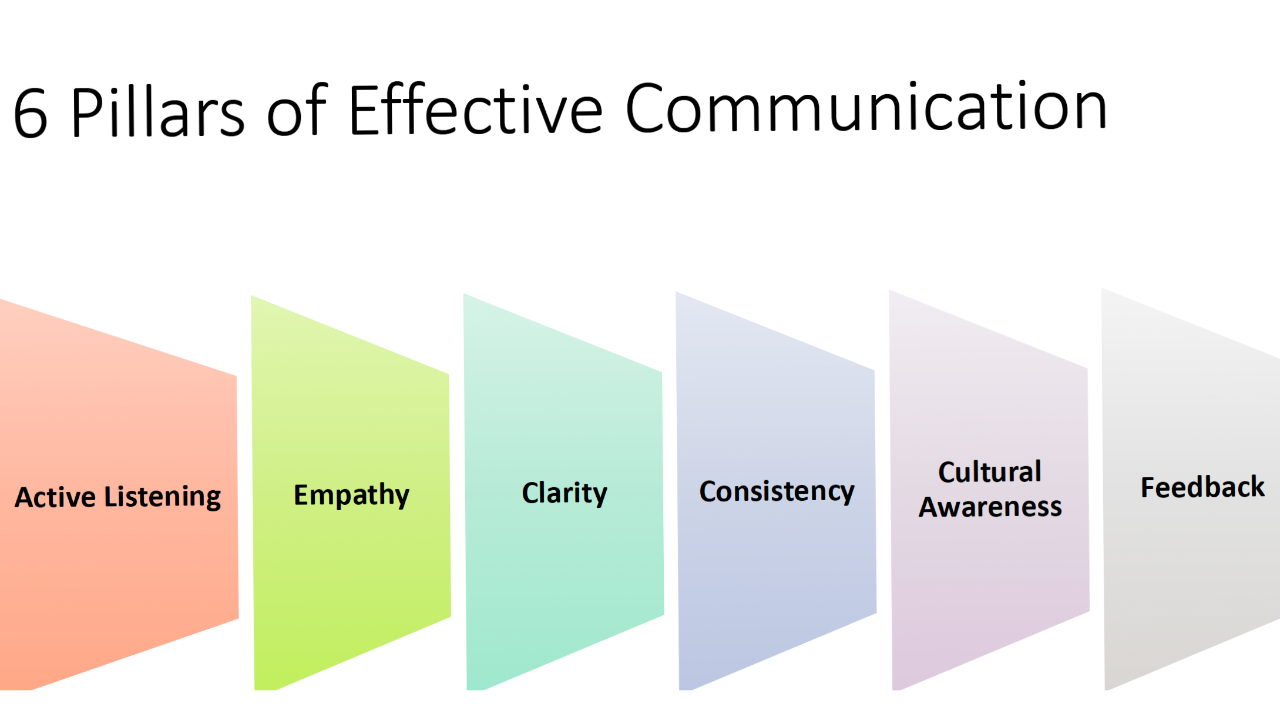
For more than two decades, I taught law students how to communicate with clients in a live-client legal clinic.
What I have found in my work with attorneys and leaders is that the skills that made students effective communicators with clients are the same skills that make lawyers effective leaders of people. That observation is what gave shape to my 6 Pillars of Effective Communication framework.
Pillar 1: Active Listening
Active listening is not waiting for your turn to speak. It means giving your full attention to what someone is saying, and to what they aren't saying.
In clinic, I watched students focus so much on their interview questions that they missed what the client was actually telling them about their situation. Once students listened actively, they almost always discovered something that reframed the problem.
The same thing happens in practice. An attorney who listens actively creates the conditions for honest communication. Attorneys who don't practice it tend to find out what they missed only after it becomes a problem.
Pillar 2: Empathy
Empathy in a legal context isn't about feeling what someone else feels. It's about taking the time to understand their story and why it matters to them before you respond, advise, or redirect.
In clinic, empathy was what allowed students to understand not just the legal issue but what was at stake for the person sitting across from them.
In practice, it's what allows you to understand why a client or colleague is struggling before you decide how to respond.
These two pillars do something important together: active listening gets you the full picture, and empathy helps you understand what to do with it.
Pillar 3: Clarity
Clear communication is not just about choosing the right words. It also means adjusting how you communicate based on the situation and the person, and being intentional about what the conversation is actually trying to accomplish.
Before a difficult conversation, it helps to ask: What would a useful outcome look like here, even if disagreement remains? That question alone shifts the focus from being right to being effective.
Clarity also means resisting the urge to act on incomplete information. In my feedback training, I see this pattern regularly: someone makes an assumption about what a colleague meant, what a client needs, or why an associate made a particular choice. Then they respond to the assumption rather than the reality.
Asking questions is the practical skill that closes that gap. When something is unclear, check in: "I want to make sure I understand correctly..." followed by a paraphrase of what you heard. That combines the pillars of active listening and clarity and prevents misunderstandings.
Pillar 4: Consistency
Consistency is about how and when you communicate, and whether people can count on you to follow through after the conversation ends.
In a busy practice, follow-through communication is easy to let slip. A difficult evaluation conversation goes well, and then the demands of the day take over. No check-in, no loop closed.
Consistent communication means doing the small things reliably: responding to messages within a predictable window, following up after a difficult conversation, and acknowledging when someone acts on feedback. "I noticed you approached the framing differently in this draft. That's exactly what we talked about." Silence after improvement is a missed opportunity.
Pillar 5: Cultural Awareness
Every conversation is shaped by factors neither person fully sees. Culture, personality, life experience, context, and perception all influence how we communicate and how we interpret what others say.
So does implicit bias, which shapes our assumptions about people before a word is spoken.
In practice, this means that two people can have the same conversation and walk away with entirely different understandings of what happened.
A communication style that reads as direct and confident in one cultural context may read as aggressive or dismissive in another. A silence that signals respect in one setting signals disengagement in another.
Cultural awareness doesn't require knowing everything about everyone. It requires staying curious, suspending assumptions, and recognizing that your way of communicating is not the only valid one.
Pillar 6: Feedback
Feedback is a constant in my work with attorneys and leaders because it has the power to drive growth or stifle development.
Build resilience or deepen self-doubt.
Model effective leadership or undermine it.
How it's delivered, and how it's received, shapes the culture of an entire organization over time. That's why I keep coming back to it.
In legal culture specifically, feedback is also where communication most often breaks down.
The instinct to evaluate and judge runs so deeply in lawyers that separating assessment from development is genuinely hard. Feedback that lands as a character flaw rather than guidance closes people down rather than opening them up.
Effective feedback starts with saying what you have observed and asking for what you need — clearly and compassionately. It requires intentionality about both what you say verbally and what you signal nonverbally.
Feedback is where all the other pillars converge.
What makes all six work
Active Listening. Empathy. Clarity. Consistency. Cultural Awareness. Feedback.
Underneath the six pillars of effective communication lies one core value: the willingness to take responsibility for how you communicate. Not responsibility in the sense of blame, but in the sense of ownership. The assumptions you bring into a conversation, the effort you invest in being understood, the follow-through you offer after a difficult exchange — those are choices. And they are yours to make.
Stay connected with news and updates!
Join our mailing list to receive the latest news and updates from our team.
Don't worry, your information will not be shared.
We hate SPAM. We will never sell your information, for any reason.

